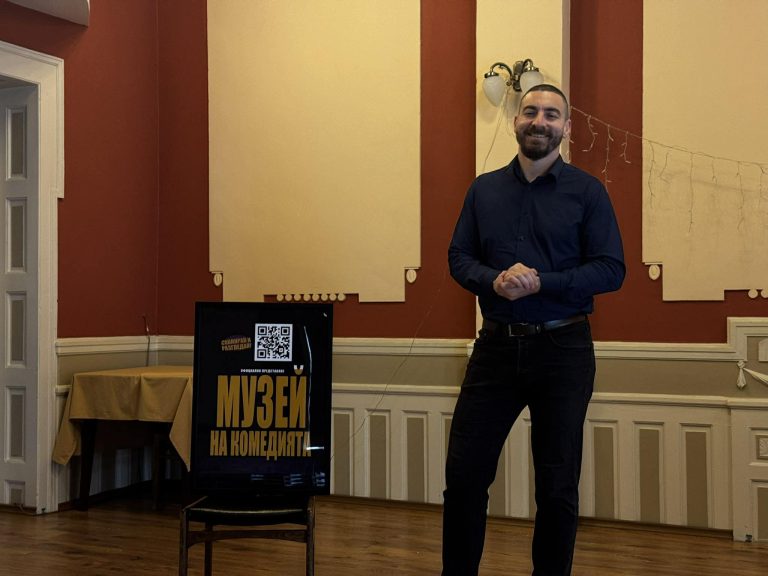

The museum was created as part of the implementation of Project BG-RRP-11.020-0168-C01 – Digital Museum of Bulgarian Comedy, funded by the European Union through the NextGenerationEU instrument.
Process of Creating a Digital Museum of Comedy
The creation of an online platform is a complex and multi-stage process that requires careful planning, coordination, and the consistent implementation of various activities.
The main objective is to build a functional, accessible, and sustainable digital space that provides high-quality content and ease of use for a wide range of users.
The process begins with the stage of collecting and selecting information, during which research on the subject matter is conducted. Various sources are gathered, including historical data, archival materials, visual resources, and other relevant content related to the platform. This is followed by a careful selection of the information, with a focus on its reliability, relevance, and significance. Fact-checking and data comparison are carried out to ensure accuracy and credibility.
After the research phase, the process moves on to structuring and categorizing the content. The information is organized into clearly defined sections and categories, which facilitate navigation and user orientation. Clear thematic directions are created, allowing quick access to different types of content, such as personalities, events, works, historical periods, and more. This process is essential for ensuring a well-structured user experience and effective presentation of information.
At the same time, the development of the digital platform itself is carried out, including design, programming, and content integration. Special attention is given to creating an intuitive and user-friendly interface that is accessible to different groups of users. The design is aligned both with the visual identity of the project and with functional requirements for usability and efficiency.
An important stage of the process is platform testing, which includes checking its functionality, stability, and compatibility across various devices and browsers. Tests are conducted on computers, tablets, and mobile devices to ensure full accessibility and proper content visualization. In cases where technical issues or inconsistencies are identified, corrective actions are taken, including code optimization, design adjustments, and improvements to the user experience.
The process also includes continuous monitoring and improvement of the platform after its initial launch. User interactions are analyzed, and updates to content and functionalities are carried out.
The creation of an online platform is a dynamic and multifaceted process that combines research, analysis, technological development, and continuous optimization. Through a systematic approach and attention to detail, a high-quality digital space is achieved, meeting modern requirements for accessibility, reliability, and efficiency.

About the Author