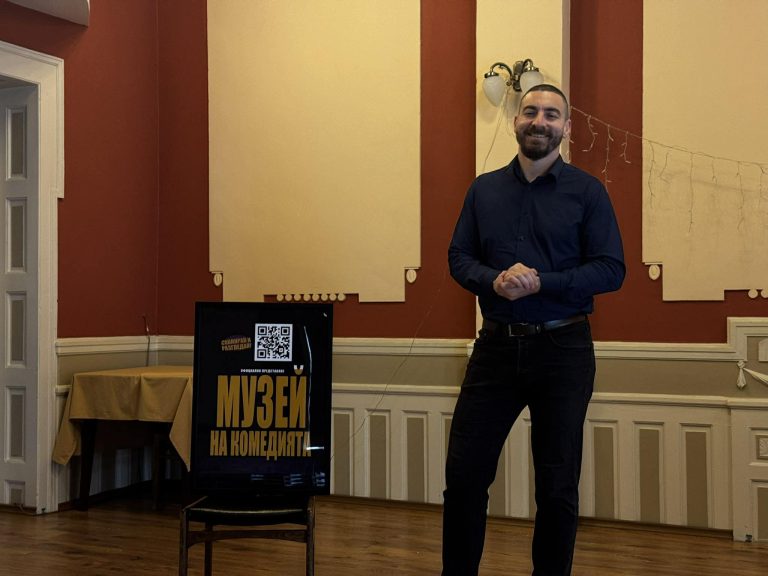

The museum was created as part of the implementation of Project BG-RRP-11.020-0168-C01 – Digital Museum of Bulgarian Comedy, funded by the European Union through the NextGenerationEU instrument.
The Digital Museum of Comedy is designed as a structured and easily accessible platform, organized into five main sections:
- Home
- Articles
- Archives
- Periods of Comedy in Bulgaria
- Notable Figures
This clearly defined structure allows users to quickly navigate the content and find information according to their interests.
The “Home” section serves as an introduction to the entire digital museum. It brings together interactive elements from all other sections, providing a comprehensive overview of the content. It is designed to be both informative and engaging, featuring selected highlights, visual elements, and navigation links to the different categories. In addition, it includes quotations from notable figures who have contributed to the development of comedy across various historical periods, adding cultural and historical value to the homepage.
The “Articles” section contains a wide range of texts dedicated to different aspects of comedy. Here, users can find materials on prominent figures, films, television series, theatrical productions, books, newspapers, and magazines, as well as on circus arts in Bulgaria and various awards in the field of humor. The section also includes comparisons between different comedic techniques and styles, making it particularly useful for more in-depth distinctions and analysis.
The “Archives” section offers multimedia content that complements the textual materials. It includes videos featuring commentary and highlighting key moments in the history of comedy, as well as audio files intended for independent listening. Additionally, it presents covers of well-known Bulgarian works related to comedy, each accompanied by a button that leads to more detailed information about the respective work. This enhances interactivity and facilitates deeper exploration of the content.
The “Periods” section focuses on the historical development of comedy in Bulgaria. It outlines the most important characteristics of each historical period, examining how comedy has evolved, what forms it has taken, and how it has been expressed within different social and cultural contexts. Particular emphasis is placed on changes in style, themes, and functions of humor over time.
The final section, “Figures,” includes brief biographical profiles of notable authors, actors, satirists, and other individuals who have contributed to the development of comedy in Bulgaria. This section highlights the importance of individual contributions and allows users to become familiar with key figures and their significance within Bulgarian cultural tradition.
Overall, the structure of the digital museum combines textual, visual, and audiovisual content, creating a rich and interactive environment for exploring comedy as a cultural and artistic phenomenon.

About the Author